
Cyclades yacht charter: a 7-day itinerary from Athens
November 27, 2026
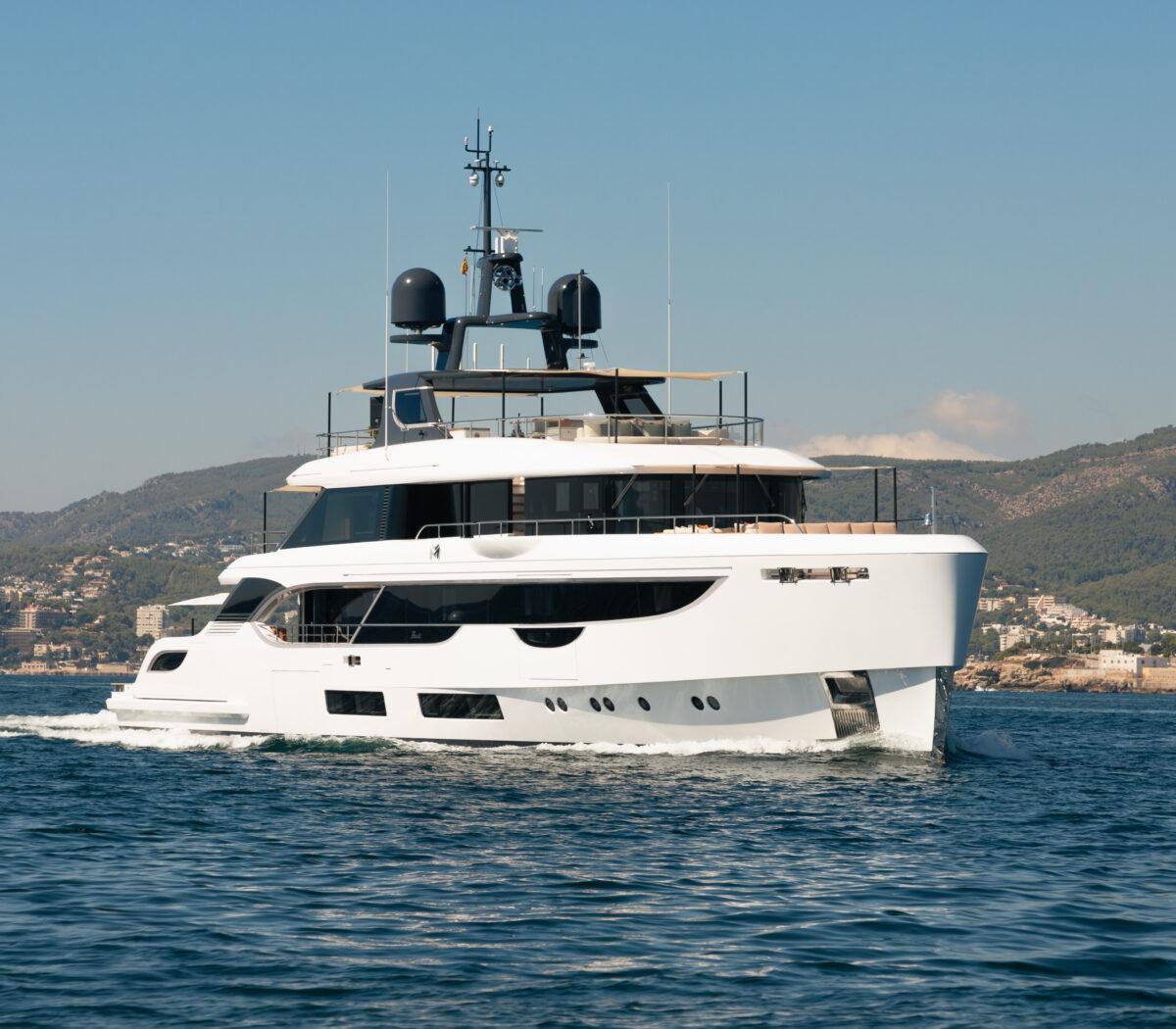
If someone calls our Athens office and mentions ‘Greece’, most of the time it will be the Cyclades Islands that they’re thinking of. Pretty villages built on dry hillsides and bright blue-domed tiny churches. Plus there is some of the clearest water around where you can easily see right down to the seabed and sand from where you’ve dropped your anchor. Of course we can see why. But what many fail to realise is that during peak season the Cyclades are actually the most windswept and most lively part of the Greek archipelago. Our advice is affected by this. In our view a good Cyclades holiday involves not only the ideal boat but also a flexible schedule. Below are our recommendations on these areas together with a 7-day itinerary from Athens which we often develop for clients wanting to charter a crewed vessel in the Cyclades.
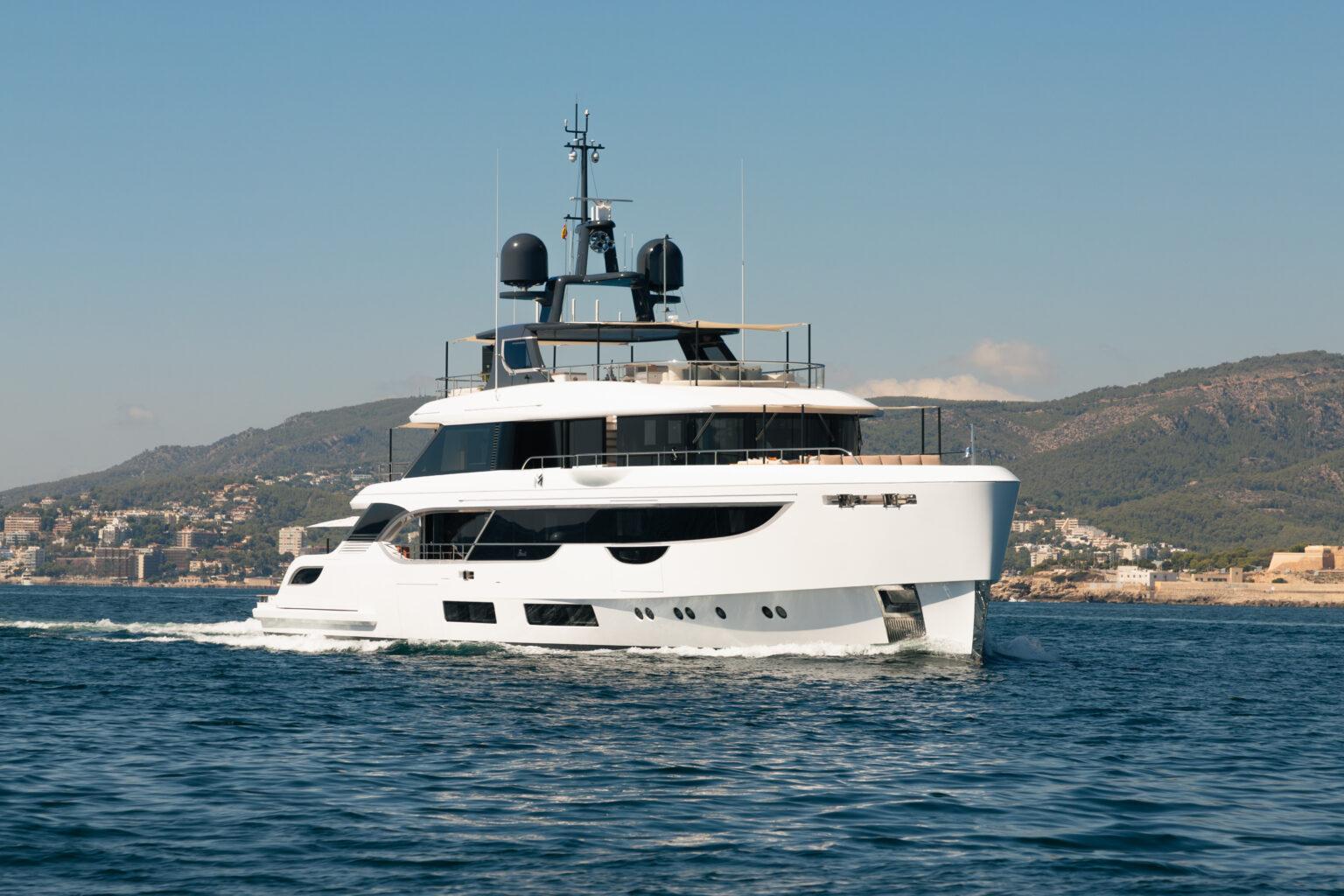
Why we send people to the Cyclades by yacht
There are numerous islands within this group and many are just a short distance from each other. So you can effectively sleep on one and then eat on another, and not spend too much time travelling between them. Each island varies widely; for example you may wake up on one which is well known for its nightlife and by lunchtime be moored off another which has just two tavernas, a goat path and little else. This is very much the attraction of a boating holiday. Whereas with hotels you will (perhaps) experience two islands at most, and even then only if you summon up the courage to take a ferry. But on board you typically experience five or six islands and all the bays which are inaccessible by land.
Then there is the issue of seclusion, which matters more to clients than is always openly recognised. Popular Cyclades islands such as Mykonos and Santorini are at their busiest in July. Using a yacht allows you to choose when to visit places, enjoy whatever you wish and then depart. By the evening you can often be comfortably anchored off an island which the majority of tourists never even visit.
The meltemi: the wind that decides your week
The northerly Aegean wind is called the meltemi. It is strongest in July and August and can last for several days. As a result we devote more care to developing itineraries for clients in the Cyclades than we do for those wishing to explore the Ionian or Saronic islands. Fortunately the wind tends to die down in the evenings. Along with this, the air is typically fresher and the skies are clear. In fact, many clients who initially feel apprehensive about the meltemi soon grow to like it.
So what does this mean for you? Primarily, it emphasises the importance of the boat. Motor yachts are quicker and provide a smoother ride when sailing between islands. For this reason we often suggest that clients use a motor yacht on a crewed basis in the Cyclades. Further still, a skipper will constantly check the weather and could even re-arrange two days in the itinerary so that you can travel with the wind at your back rather than against it. You will also begin to value the sunny, south facing bays. With the wind blowing, the skipper will position the boat on the leeward (protected) side of an island and then you can again enjoy a quiet lunch on deck.
If at all possible we would strongly suggest travelling in June or September. Water temperatures are still pleasant, winds are usually calmer and anchoring spots are considerably less busy. We have provided further information on these shoulder months in our article on the best time to visit the Greek islands.
Picking the right yacht for the Cyclades
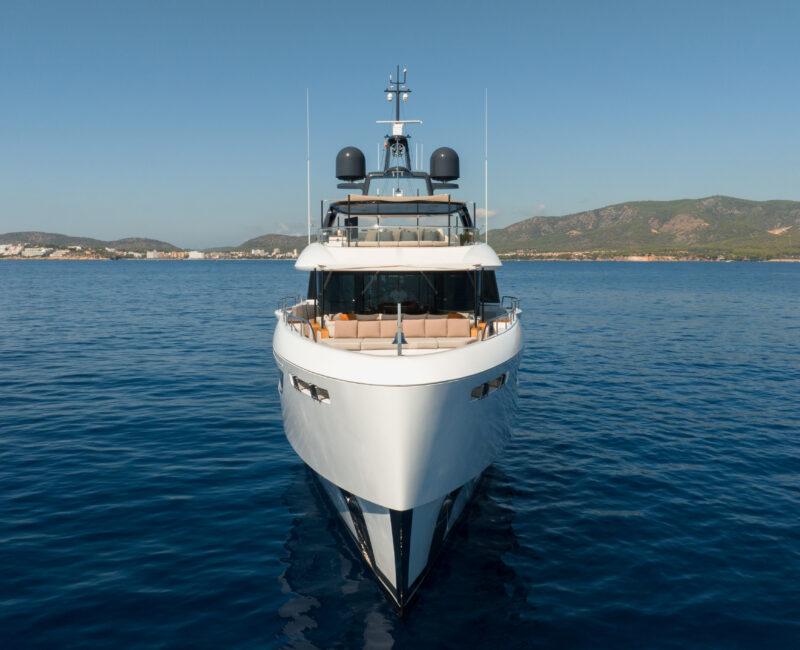
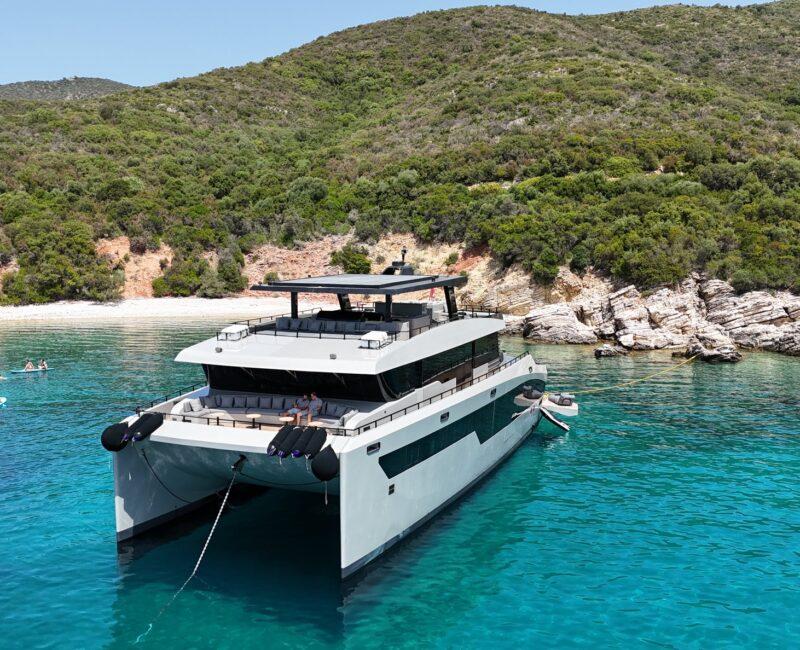
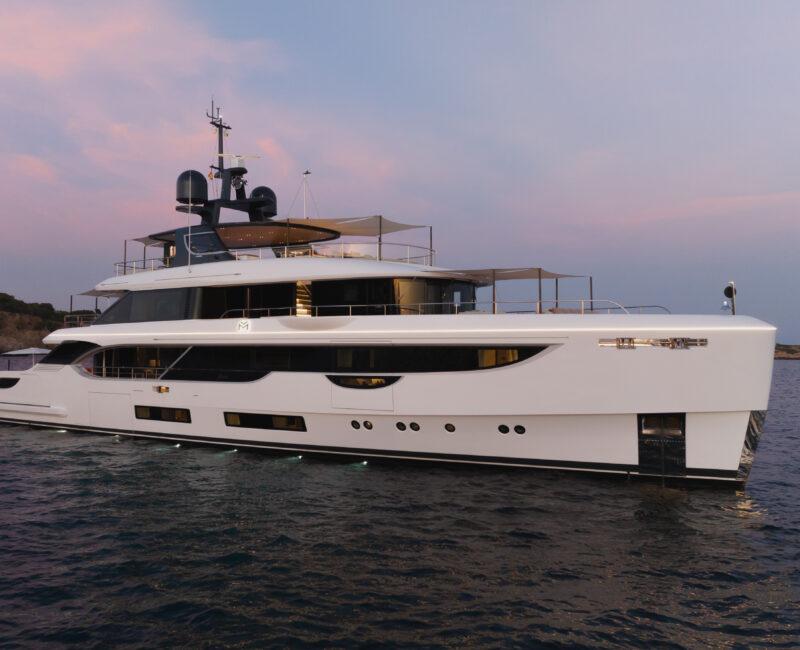
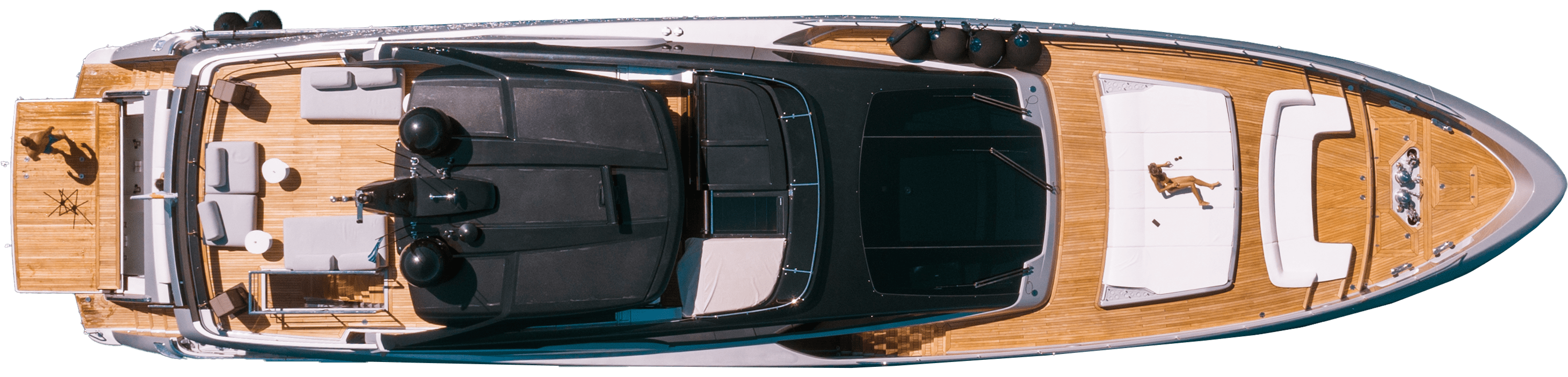
Most people choose a motor yacht as it provides the best scope to include the islands you wish to visit in a 7 day period and also provides a more stable vessel for sea travel. However, sailing yachts and catamarans are also very suitable and frequently more economical, particularly in June and September. For further information please see our dedicated page on crewed catamaran charter in Greece.
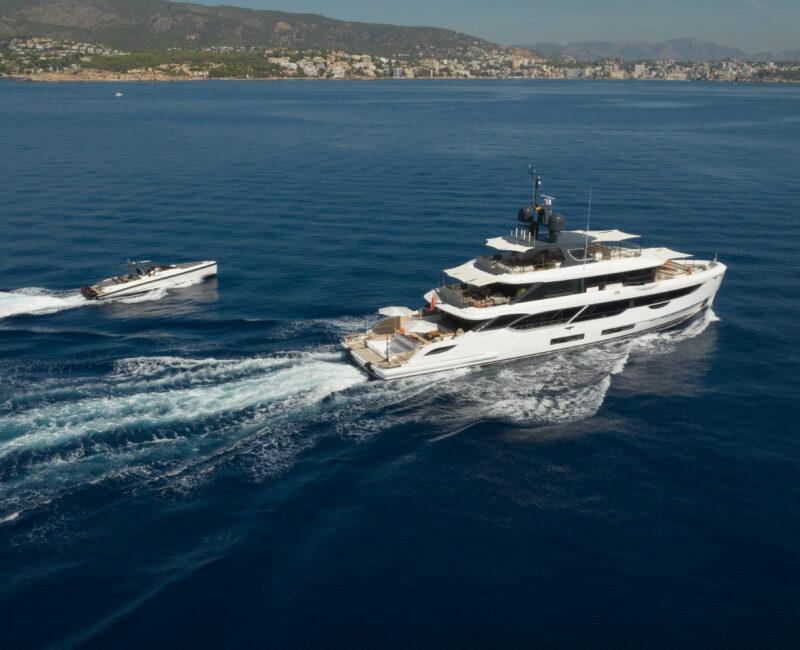
Whilst assessing a yacht we always encourage people to consider not only the accommodation but also the tender and equipment. The tender allows you to quickly travel between anchorage and a taverna in a harbour. Indeed, some of the best experiences in the Cyclades are enjoyed from a tender: swimming into sea caves, popping in to villages for a coffee and even landing on beaches that are not accessible by road. Our charter team can advise you on an appropriate selection of yachts to suit your dates and party size.
A 7-day Cyclades itinerary from Athens
As both the start and end point is close to Athens there is no need for clients to worry about complicated flight arrangements. Most weeks start at Alimos, Flisvos or Zea, on the Athens Riviera and in Piraeus. Our guide to the ports Greek yacht charters start from includes information about all of these. Again, please bear in mind that the following is a general indication only. Throughout your week the skipper will adapt this.
Day 1: Athens to Kea
Having boarded in the afternoon you will have time to settle in and meet the crew. Being the Cyclades’ island closest to Attica, Kea (often known locally as Tzia) is only a short distance away. Anchor off one of its tranquil bays and whilst you are here enjoy dinner on board and your first swim. Athenians enjoy coming here for weekends but generally foreign visitors pass it by. Therefore, it is a pleasant and uncomplicated way to commence a holiday.
Day 2: Kea to Syros
Continue on a south eastern course to Syros. For many years, Syros’ principal town Ermoupoli has been the Cyclades’ capital. It is unlike any of the other islands with its mix of neoclassical houses, impressive town hall and lively port which is active throughout the year, not just during the height of August. In the evening stroll up to Ano Syros, Syros’ old town area and dine in the town. Tomorrow you will really come to value this difference.
Day 3: Syros to Mykonos
Morning time is used to transfer to Mykonos. In the afternoon you can then relax at one of the island’s beach clubs or beaches on the south coast. Later, the tender can be used to explore Mykonos Town including the beautiful Little Venice and windmills, ideally viewed at sunset. Should you wish, you can also dine onshore. In peak season it is wise to allow the crew to pre-reserve good quality restaurants and nightclubs as these are in high demand.
Day 4: Delos and Rhenia, then Paros or Antiparos
Situated just off Mykonos, Delos is one of Greece’s most significant archaeological locations and is also included on UNESCO’s World Heritage Site list. We recommend visiting early to avoid the midday sun and day-boats. Then swim in the protected waters around Rhenia, which lies right next to Delos. Very few people actually live here and, not surprisingly, there are frequently very few boats. In the afternoon transfer to either Paros or Antiparos. On Paros, Naoussa on the northern coastline has transformed itself into a fashionable village from its former fish port status. Fortunately, it has maintained its excellent culinary provisions. For those seeking a more tranquil location, Antiparos is separated from Paros by a strait of water. There are some wonderful anchoring areas here.
Day 5: The Small Cyclades
Moving south eastwards from Naxos there are smaller islands including Koufonisia, Schinoussa, Iraklia and Donoussa. Many of our clients describe this as their favourite day. There is just sand and colourful shallow water, and not much more, which is exactly what is so attractive. (See Beautiful Greece pt.2 for details of Koufonisia.) Alternatively, if the wind is strong the skipper may take you to Naxos, the biggest of the Cyclades islands. This has a lovely old town and a beautiful marble archway called the Portara at the entrance to the harbour. A sound alternative.
Day 6: Sifnos or Serifos
Now sailing westwards. Sifnos is well known throughout Greece for its food and ceramics. It also has some of the most beautiful villages in the Cyclades. Serifos is more rugged. Sitting atop the hill above the port is Serifos’ Chora, and again there are few people on its beaches. Both are excellent options. Normally the wind conditions and how far away from Athens you wish to be on your final day are what decide where you go.
Day 7: Kythnos and back to Athens
On your journey back, visit Kythnos. Kolona is the island’s most famous beach and is a narrow sandy strip which connects it to the islet of Agios Loukas. As such, there is water on both sides of you. Spend a final day swimming, then enjoy lunch. Finally cruise back to the mainland. Often people do not even disembark on a charter until the next morning, so another evening is spent on board.
Going longer, or going one way
Whilst seven days is an ideal introduction to island life, ten days or more allows access to the southern Cyclades. Sailing one-way (for example Athens to Mykonos) is frequently an option. Occasionally, a charge is made for the skipper to return the yacht to its point of origin. Islands that could be of interest to visit include:
- Milos: for its volcanic landscape, the white rocks of Sarakiniko and the sea caves and rock stacks of Kleftiko (which should definitely be viewed from a boat).
- Folegandros: offering a Chora situated on a cliff-top and a more relaxed atmosphere than some of its more well-known sister islands.
- Santorini: magnificent to view the caldera from the deck. Due to the great depth of the water, the skipper will calculate a suitable waiting spot for the yacht whilst you are on land.
- Ios and Amorgos: Ios provides great beaches together with a fun nightlife scene. Amorgos has a cliff-top monastery and amongst the most stunning landscapes in the Aegean Sea.
We sometimes advise families, or those wishing to limit their time on board, to divide a week between the Saronic and western Cyclades. This tends to be a more relaxing option. Refer to our article on the Saronic islands for further information.
What a day on board actually looks like
Generally, a day involves breakfast and then an early swim (before other people). Later in the morning the yacht will then depart and seldom sails for more than a couple of hours. Lunch is eaten at the next anchorage. Afternoon activities frequently centre around the recreational equipment, beach or, if preferred, relaxing in the shade. In the evening, people either go to a nearby village or continue on board. Again, often the social highlight for charter guests is the food prepared and served on deck by the chef.
Before you arrive, please inform the crew of your likes and dislikes. Ideally complete a form detailing your favourite food and drink types together with any allergies and also your desired level of activity for the week. The more information you can provide in advance, the less you will need to ask of the crew during your charter.
What a Cyclades yacht charter costs
Prices depend on the yacht and its length and also on which time of year it is chartered. Location within the islands has little effect. Our Greece Yacht Charter Price Index shows that for 2027 the median price before additional costs for a Greece based yacht is €59,000 a week in low season and €69,000 in high season. On top of this, you’ll need to pay for the APA (covering running costs, provisions and harbour fees) which is paid at the end of the charter period. Then there is VAT and an optional crew tip.
As the Cyclades are more spread out than the Ionians, fuel consumption is typically greater and this should therefore be taken into account when calculating the APA. Crewed charters incur 13% Greek VAT on the charter price. However, yachts with suitable certification are invoiced on a reduced amount and in practice this is generally either 5.2% or 6.5%. Further information and references can be found in our article on VAT on a yacht charter in Greece and also in our article on weekly prices, APA and how to choose a broker.
A few things we’d tell you over coffee in Athens
Book in good time if you’re planning to charter for July or August as the most desirable yachts become booked up. The sooner you book, the more choice you’ll have.
As soon as you know who is travelling, please share this with us including people’s ages. Although the length of a yacht is important, the configuration is often even more so. A yacht that appears ideal may in fact not be suitable for three couples and two teens.
Avoid fixing a set list of islands as this is often the fastest way to end up on a rough crossing. When reviewing quotations, ensure you’re comparing the total cost which should include the charter price, APA, VAT and any delivery charge. Ideally, try to include an extra night in Athens prior to, or following, your charter. For inspiration, check out our list of the most beautiful places in Athens.
We’ve been offering yacht charter services from our Athens office since 2017. Our charter, sales and yacht management expertise extends to a global portfolio. If you’re still unsure where to charter, why not begin by exploring our guide to yacht charter in Greece? Then investigate the Ionian and Dodecanese areas and indeed all our Mediterranean charter guides. Once you’re ready, please send us your dates and we will then suggest suitable yachts for you.
Frequently asked questions
Is a week enough for a Cyclades yacht charter?
Yes, for an initial charter. From Athens you can usually visit around five or six islands such as Kea, Syros, Mykonos, Delos, Paros and the Small Cyclades. Days at sea are not generally lengthy. With 10 days or more, you could also visit Milos, Folegandros or Santorini.
When is the best time to charter a yacht in the Cyclades?
Typically we advise June and September as temperatures are good, winds are often calmer and anchorages less crowded. July and August are the peak months and it is during these times that the meltemi winds are strongest. It is therefore essential that itineraries are adaptable.
Where do Cyclades yacht charters start?
Primarily charters depart Athens, at Alimos, Flisvos or Zea. Mykonos is also often used as a departure and/or base location.
What kind of yacht is best for the Cyclades?
For July and August, a crewed motor yacht is generally the most pleasant as it can swiftly cross the open sea between islands. Sailboats and catamarans are also highly suitable, especially during June and September.
How much VAT is charged on a yacht charter in the Cyclades?
In Greece, 13% VAT is added to the charter price for crewed charters. Again though, yachts with appropriate certification are invoiced on a reduced amount so in effect 5.2% or 6.5% is generally applicable. This is stated in both the proposal and charter contract for a specific yacht.
Can we visit Mykonos and Santorini on the same charter?
Yes. However, these islands are reasonably distant from each other. Mykonos is central within the Cyclades and Santorini lies at the extreme south. Therefore, ten days or more, or alternatively a one-way week is more suitable for both. Generally, for a seven day return voyage from Athens we select either Mykonos or Santorini and then use the time saved to visit less crowded islands.
See more Oxyzen Yachting superyacht charter guides in Google:
Recommended Articles
Apostolos KorakasApostolos KorakasApostolos KorakasApostolos KorakasApostolos Korakas